
Mongolian Cashmere: legacy of war
All we need is love
Mongolian cashmere is set to "volume" by default. It's a big problem.
It doesn't have to be this way. Cashmere doesn't need to be a "pile high, sell cheap" fibre. Pursuit of volume isn't working for anyone. Making a decisive shift, now, back to quality will deliver benefits for nature, for livelihoods, for animal welfare. And for quality of cashmere.
We just need to fix the underlying problem in the system. Which is a legacy of war.

War, war is stupid
Even the most ardent fans of Culture Club will admit that The War Song was not one of their best. The refrain - that "war is stupid" and "people are stupid" was incredibly annoying. Yet.....maybe they had a point.
Our business systems are infected with militarism. Marketing is infused with military jargon - campaigns, positions that need defending, product offensives, conquering markets etc.
Many production systems are designed for military needs. A long time ago I worked at VW. The centre of VW's universe is a massive factory in Wolfsburg, whose operating system was born in the late 1930s and planned in preparation for a war. For the first 5 years of its life it did nothing other than churn out army vehicles for that war.
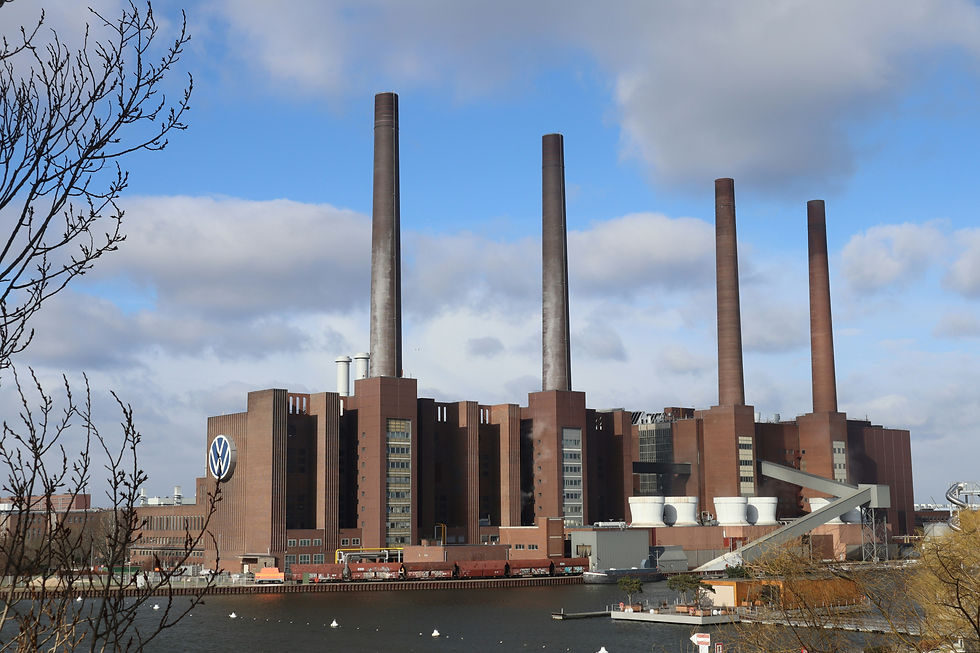
The success and volume growth of the VW Beetle couldn't have happened without that "maximise volume" operating system. But the Beetle was a mass market product.
Cashmere is not.
The Afghan War led to the push for volume.
Mongolian cashmere increased in volume, weight and width as a direct result of the Soviet army need for wool and meat* during the Afghan occupation through the 1980s. Mongolia's herders were directed to maximise volume. Grow the herd sizes, keep the animals for longer, get more volume from each goat. (Including cross breeding for additional weight). Bigger, older goats produce thicker cashmere.
That volume increase has wrought havoc on the Mongolian grasslands, creating an overgrazing monoculture and income dependency on a rapidly commodifying "luxury" fibre. Other factors compound the problem but the hard wiring to "volume" needs fixing.
In 1970 Mongolia produced 1,500 tons of raw cashmere. In the 2020s that annual figure has soared to around 11,000 tons. Since the 70s the average micron of Mongolian cashmere has shot up whilst real prices for herders have steadily declined.
Most crucially as a direct result of the "maximise production" directive the processors who buy cashmere from herders stopped differentiating prices based on quality. They paid by the KG. That "price per Kg" system has persisted to this day.
And that's at the heart of today's cashmere problem. The system is designed for volume not origin or quality.
Most current primary processors have a minimum quantity of 3 tons of raw fibre that they can process at the very first stage (sorting). That's cashmere from maybe 25,000 goats. As the minimum quantity. There's no way to get that much from one place. So at the very first processing stage all hope of tracing to origin is lost.
The Quality Paradox: better quality = less weight...which = less money
The weight difference between 17.5 micron cashmere and 15.5 micron cashmere is 24%**. That means (in a "price per Kg" system) that bigger, lower quality goats earn more money than low yield fine quality goats. Quality loses you money.

Cheap cashmere is fast becoming the "British Wine" of fashion
"English Wine" - especially sparkling wine - is respected globally and commands the kinds of prices that make winemakers very happy. English wine is made from well tended grapes in well managed vineyards in quantities that match natural capacities. The value comes from origin and its provenance.
But don't confuse "English wine" with "British wine". The latter is (legally at least) not wine in that it is a drink made from bulk juice shipped in from anywhere in the world. British wine is a factory product based on cheap bulk ingredients from "wherever".
Mass produced cashmere is on its way to being the fashion equivalent of British Wine. Bulk fibre shipped in from "wherever" and thrust through huge machines.
Imagine if "fine wine" was produced on the Mongolian cashmere model.
No terroir, no provenance, no romance. Just juice.
The fix: a decisive shift away from volume to quality and value
Volume maximisation is degrading rangelands, eroding livelihoods and animal health. The route to a more sustainable system is inextricably bound up with a shift away from volume and back to quality.
The future for cashmere has to be supply systems that respect origin and amplify provenance.
For that to work we need to address the underlying problem in the supply system to fix the economics. The equation needs a revised concept of "value" - where healthy rangelands, (fewer) happier animals, lower intensity, lower yield but higher quality product delivers a clear economic advantage over "volume maximisation".
This "high value, low yield" economic equation is at the heart of "regenerative" and we're utterly convinced it works for everyone. What we need to do now is to show how and make it easy to copy. We are on the cusp of a new kind of nature friendly economics.
There's a lot more to do but it rests not on maximising the volume of one material at the expense of everything else, but on whole system value. There is untold waste in the single commodity volume maximisation mode - and untold value left in the landscape.
We've written many times about the shift to diversification - economy of scope not economy of scale. Business systems that mimic the diversity and adaptability of Nature. What we shouldn't be doing is chasing premiums.
Arguing that "if better cashmere weighs 24% less there ought to be at least a 25% premium" is not going to work.
Instead we need a whole system view which sees value not just in the extracted commodity, but in the total landscape and everything in it.
A system built on love not war
It's no surprise that production systems built for war are destructive.
What we need is a system built on love and care.
Less destruction, more nurture.
Less stuff, but better stuff.
That doesn't mean massive price hikes - it means a new mainstream.
Over the next few months up to, and then beyond COP17, we aim to showcase what "less but better" looks like at rangeland level, for supply systems and financially.
There is a growing (but messy) coalition of players across fashion, food, finance and more coming together to build the showcases and make the pathway to regenerative economics.
Whilst it's hard work and involves a hefty dose of science, technology and economics, at the heart of it is a mission to reconnect ourselves and our systems with the Natural world. Ultimately the mess we've created is because we got disconnected. Fixing the mess starts with reconnection.
*check out the quality story in chapter 3 from page 24
** check out section 4 in this report


Comments